Benedict Evans surveys what AI does to software, and it certainly doesn’t kill it. He covers the familiar shifts: faster development, new AI-powered features, and likely disruption of incumbent software solutions. But then he turns to the most interesting question: what forms will intelligent interfaces take, and how will those forms change both business and customer?
Evans considers how SaaS and mobile both changed what software (and software companies) look like:
One way to think about both of these is that the first step was to do the old thing with a new tool, but the next step was to think of things that were native to the new form. We started by making a Flickr app for mobile, and then we made Instagram, and then we got Snap and TikTok, which embraced the fact that this was a device with a camera, and a touchscreen, and its own compute instead of just a website. Some of the early thinking around AI software is to look at generative interfaces, to think about how dynamic and intelligent the screens could be, and to wonder if you might move away from carefully fixed screens and predefined workflows. No one really knows, but a lot of people will have fun experimenting. …
As I say, in almost every essay, meanwhile, this is all very 2007, or 1997, or very 1982. We know this is huge, we can sort of see some of what’s coming, but we don’t really know how any of this is going to work. And so, there is an enormous amount of white space out there, for people to go out and create things, that have nothing to do with stupid ideas like ‘software is dead’.
Generative interfaces. Dynamic and intelligent screens. A shift away from static workflows.
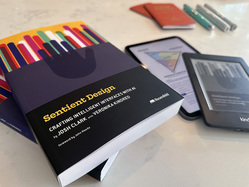
Amen. That white space is where a new era of intelligent interfaces lives, and it’s exactly the territory that Sentient Design maps out. If you’re one of those people who will “have fun experimenting,” Sentient Design’s framework and design patterns will give you a head start. Get after it.