Ethan Mollick reviewed the research that chat interfaces introduce heavy effort that undermines complex, specialized work. His conclusion is that the future of AI-powered interfaces is specialized interfaces built on the fly in response to user intent and context:
Instead of having companies build a specialized interface for every kind of work, the AI generates the right interface on the fly. I suspect the future isn’t one interface to rule them all. It’s AI that generates the right interface for the moment, an agent on your desktop, a chart in a conversation, a custom app to solve a problem. We’re moving from adapting to the AI’s interface to the AI adapting its interface to you.
AI capability has been running ahead of AI accessibility. The models have been smart enough to do extraordinary things for a while now, but we’ve been making people access that intelligence through chatbots. And, as that cognitive load research shows, the chatbot format is actively working against them. As interfaces improve, we’re going to see what happens when a much larger number of people can actually use what AI is capable of. Every new interface that closes even part of that gap will feel like a leap in AI capability, even when the models haven’t changed (though they are still changing). My guess is that a lot of the “AI disappointment” people sometimes express comes not from the AI being bad, but from the interfaces being wrong. We built one of the most powerful technologies in recent history and then made people access it by typing into a chat window. That will change soon.
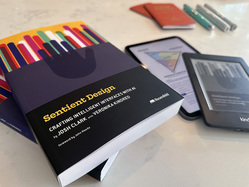
Friends, this is what Sentient Design is all about, and Veronika Kindred and I wrote an entire book about it, now available for pre-order.
(This isn’t the end of interface design, by the way, far from it. It’s an entirely new era of design. It’s super exciting and twisty and fun, and you’re needed more than ever to help make it work.)